
How to Design or Decorate Your Kitchen for Style and Function?

Introduction
A well-designed kitchen sits at the center of everyday living. It’s not only a place for cooking, but also a space where routines unfold naturally. In interior design, the challenge is to create a kitchen that feels both practical and visually balanced. Good design ideas don’t rely on trends alone—they focus on how the space is used, how it flows, and how it connects to the rest of the home, including areas like the bathroom.
Finding the Right Balance Between Style and Function
Designing a kitchen requires more than choosing finishes or colors. It starts with understanding how space works. A kitchen that looks good but lacks functionality quickly becomes frustrating, while a purely practical space can feel cold or unfinished. The goal is to bring these two aspects together.
In many homes, the kitchen is visually connected to other areas, so consistency matters. Materials, tones, and even elements like a mirror used in adjacent spaces can influence how cohesive the overall interior design feels.
Practical Design Ideas for a Functional Kitchen
1. Plan the Layout First
Before thinking about decoration, focus on layout. The relationship between the sink, stove, and refrigerator—often called the working triangle—should feel natural and efficient. A well-planned layout reduces unnecessary movement and makes daily tasks easier.
2. Use Storage Wisely
One of the most effective kitchen design ideas is maximizing storage without overcrowding the space. Combine closed cabinets for a clean look with a few open shelves for easy access. This keeps the kitchen organized while still allowing room for personality.
3. Choose Durable and Timeless Materials
Materials play a key role in both function and style. Wood, stone, and matte finishes are often preferred in interior design because they age well and are easy to maintain. Choosing neutral, long-lasting materials ensures the kitchen remains relevant over time.
4. Improve Lighting with Simple Adjustments
Lighting can completely change how a kitchen feels. Layered lighting—such as under-cabinet lights, pendant fixtures, and general ceiling lighting—helps create a more comfortable and usable space. Good lighting also highlights textures and finishes, making the design feel more complete.
5. Use a Mirror to Enhance Space
In smaller kitchens, a mirror can be a surprisingly effective design tool. Placing a mirror or reflective surface near a light source can help bounce light around the room, making the space feel brighter and more open. This idea is often used in both kitchen and bathroom design to improve spatial perception.
6. Keep Decoration Simple and Intentional
Decorating a kitchen doesn’t require many elements. A few well-chosen items—such as ceramics, glass jars, or greenery—can add warmth without creating clutter. The key is to keep surfaces functional while introducing subtle visual interest.
7. Maintain Flow with Adjacent Spaces
A kitchen rarely exists in isolation. It should feel connected to nearby areas, including the bathroom or dining space. Using similar colors, materials, or finishes can create a sense of continuity. This approach makes the entire interior design feel more cohesive and thoughtfully planned.
Case Study
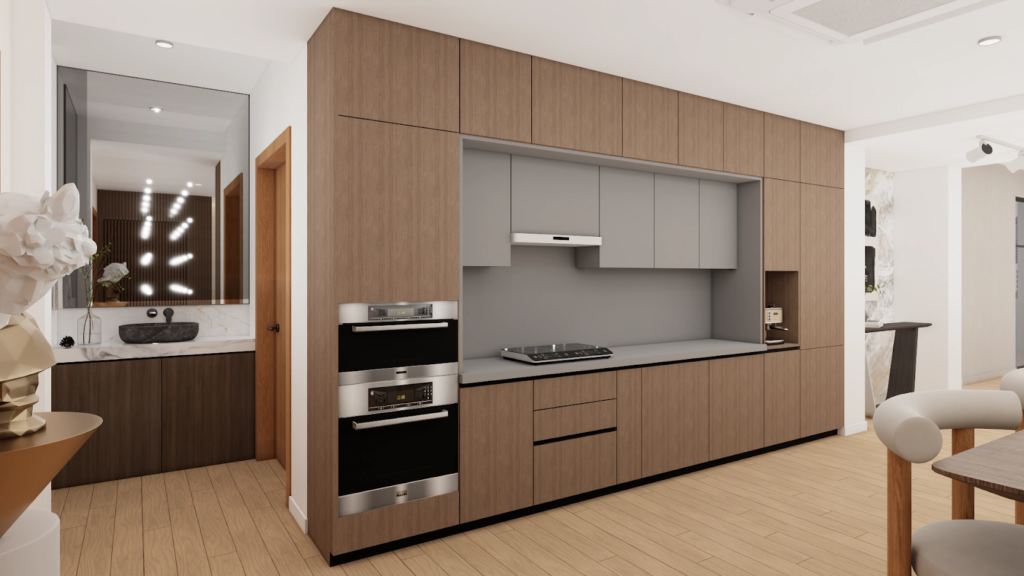
This kitchen has a calm, modern feel that fits naturally into everyday home living. The design is simple, but not plain—everything is considered, from the layout to the materials. It reflects the kind of kitchen ideas that focus on making daily use easier while still looking clean and put together.
The full wall of wood cabinetry is the main feature. It gives the space a sense of order and warmth at the same time. Instead of breaking things up with too many details, the design keeps everything continuous, which is a common approach in modern kitchen design. Built-in appliances and handleless doors help maintain that smooth look, making the kitchen feel more spacious than it actually is.
The working area is straightforward and practical. The cooktop, counter space, and storage are all within easy reach, which is something good kitchen design always gets right. There’s no clutter on the surface, but it doesn’t feel empty—just well organized.
What also stands out is how the kitchen connects to the rest of the home. The nearby bathroom area, with its mirror and open view, brings in extra light and adds depth to the space. It’s a small detail, but it shows how interior design isn’t just about one room—it’s about how spaces work together.
Overall, this is a modern kitchen that focuses on function first, with just enough detail to make it feel warm and comfortable. It’s a good example of how simple design ideas, when done well, can create a space that feels natural, efficient, and easy to live in.
Conclusion
Designing or decorating a kitchen is ultimately about balance. By focusing on layout, materials, lighting, and thoughtful details, it’s possible to create a space that is both practical and visually appealing.
When the kitchen is designed with intention—and connected naturally to other spaces like the bathroom—it becomes more than just a functional area. It becomes a comfortable, well-integrated part of everyday living, shaped by good interior design and practical design ideas.
If you are looking for more design inspiration, we invite you to visit the EClife home design platform and consult one-on-one with our designers.