
Are Rechargeable Batteries Safe for Blink Cameras? (Practical Performance Guide)
Introduction
Blink cameras are widely used wireless security devices that rely entirely on AA batteries for power. Because of this, many users consider rechargeable batteries as a cost-saving and eco-friendly alternative.
A common question is whether rechargeable batteries are actually suitable for Blink cameras—or if standard lithium AA batteries provide more reliable performance in real-world use.
From practical experience with motion-based security systems, battery behavior has a direct impact on camera reliability. Issues such as early low-battery warnings or unexpected shutdowns are often linked to battery chemistry rather than the lithium batteries for blink camera itself.
This guide explains how rechargeable and lithium batteries perform differently in Blink cameras based on real usage behavior and electrical characteristics.
How Blink Cameras Use AA Batteries
Blink cameras are designed to operate on standard AA batteries (1.5V nominal non-rechargeable cells). Their power system is optimized for:
- Low standby consumption
- Motion-triggered activation
- Short burst recording cycles
Because of this intermittent load pattern, battery stability is more important than total capacity alone.
In real use, cameras placed in high-traffic areas consume power much faster than those in low-activity environments due to frequent wake-up cycles and data transmission.
Lithium vs Rechargeable Batteries in Blink Cameras
1. Lithium AA Batteries (Recommended for Stability)
- Typically Lithium Iron Disulfide (Li-FeS₂)
- Nominal voltage: 1.5V
- Designed for non-rechargeable long-life use
Real-world behavior:
- Stable voltage during motion-triggered spikes
- Reliable performance in outdoor temperature changes
- More consistent battery level reporting in the Blink app
Lithium batteries are generally preferred because they match the voltage profile the device is designed for. If you’re wondering can you use rechargeable batteries in Blink cameras, it’s important to understand that while rechargeable options may work, they often don’t provide the same voltage stability as lithium batteries, which can impact overall performance.
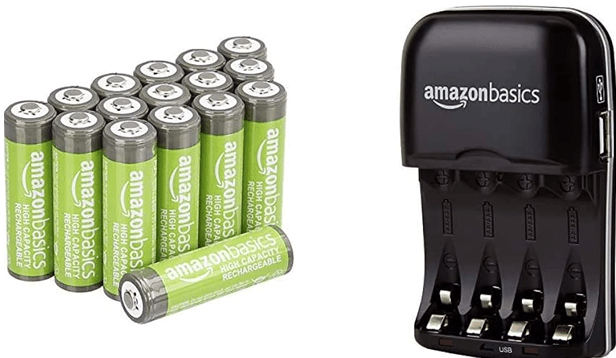
2. Rechargeable AA Batteries (NiMH)
- Nominal voltage: 1.2V
- Rechargeable chemistry (Nickel-Metal Hydride)
Observed behavior in real use:
- Shorter runtime per charge cycle
- Earlier low-battery warnings in the Blink system
- Performance drop in high motion activity environments
A key limitation is the lower voltage output, which can cause the camera to interpret the battery as “low” even when partially charged.
Are Rechargeable Batteries Safe for Blink Cameras?
Yes—rechargeable batteries are generally safe to use in Blink cameras, but safety does not automatically mean optimal performance.
From a practical standpoint:
- There is no direct electrical hazard when using NiMH batteries
- However, inconsistent voltage output can affect reliability
The main issue is not safety—it is performance stability over time, especially in security-critical devices.
Real-World Performance Differences
Based on typical usage patterns:
Rechargeable batteries:
- Work better in low-activity indoor cameras
- Require frequent recharging cycles
- May show inaccurate battery percentage readings
Lithium batteries:
- Maintain stable operation in outdoor and high-motion environments
- Deliver more predictable runtime
- Reduce risk of unexpected downtime
In practice, rechargeable batteries are more suitable for low-drain electronics, not security systems that depend on instant activation.
Key Electrical Difference That Matters
The most important technical difference is voltage:
- Lithium AA: 1.5V nominal
- NiMH rechargeable: 1.2V nominal
Although this seems small, Blink cameras are designed around stable 1.5V behavior, meaning:
- Rechargeables may trigger early low-battery detection
- Voltage drops more noticeably under load spikes
- Device efficiency can be affected during frequent motion events
When Rechargeable Batteries Can Be Used
Rechargeable batteries may still be practical in certain cases:
- Indoor cameras with low motion activity
- Temporary monitoring setups
- Users prioritizing environmental reuse over maximum uptime
However, they require:
- Regular recharging cycles
- Monitoring battery performance in the app
- Acceptance of shorter runtime
When Lithium Batteries Are a Better Choice
Lithium AA batteries are more suitable for:
- Outdoor security cameras
- High-traffic entry points
- Long-term unattended monitoring
- Cold or hot environments
They reduce maintenance frequency and provide more consistent reliability, which is important for security systems where downtime matters.
Common User Mistakes
- Using low-quality rechargeable cells not designed for high-drain devices
- Ignoring early low-battery warnings
- Mixing battery types in the same device
- Assuming rechargeable = equal performance
These issues often lead to inconsistent camera behavior rather than hardware failure.
Conclusion
Rechargeable batteries can be used in Blink cameras, and they are electrically safe. However, safety does not guarantee performance suitability.
In real-world usage, lithium AA batteries provide more stable voltage behavior, better temperature tolerance, and more reliable runtime—especially in outdoor or high-activity environments.
Rechargeable batteries are better suited for low-drain devices or controlled usage scenarios, while lithium batteries remain the more dependable choice for continuous security monitoring.
Ultimately, the right choice depends on whether you prioritize cost efficiency and reuse or maximum reliability and uptime.